A Love Letter to Sandtray Therapy
This is indeed a love letter. It starts with death. :)
We don’t have many spaces in modern life to sit with death. Often when we “work” with death, it is just that—work. We end up navigating the logistics of it rather than reckoning with it. The weight of it. What it means that we are here and won’t always be.
I had the honor of helping a client confront death and the unknown recently.
I’m not going to tell you what was in her tray. But I am going to tell you what it feels like to be in the room, and why I love sandtray and think play is underutilized in helping adults. Especially in helping perfectionists and high-stakes career professionals.
The Clinical Case
For the uninitiated readers here—sandtray can look a many different ways. But generally, it involves a tray of sand and a collection of figures you choose from to place however you wish in the sand. Sometimes we talk about what comes up. Other times it’s a silent process.
A sandtray session begins before we take the lid off the tray. For most of my clients, it begins with working through what it’s like to consider approaching the tray.
That’s how this session began—by acknowledging the anxiety, and a summoning of great courage to walk into a modality that could go in any direction. She removed the lid and chose her figures instinctively, and placed the figures in the sand.
And as the session unfolded, the sand became a mirror. As she spoke, her hands wandered amongst the figures to share another parallel story. We were both pulled into something so visceral and alive that we wouldn’t have otherwise been able to tap into.
Sandtray is somewhat trance-like. I believe that’s part of its strength and mechanism. It creates healthy dissociation as an opportunity to reconnect and access parts of yourself.
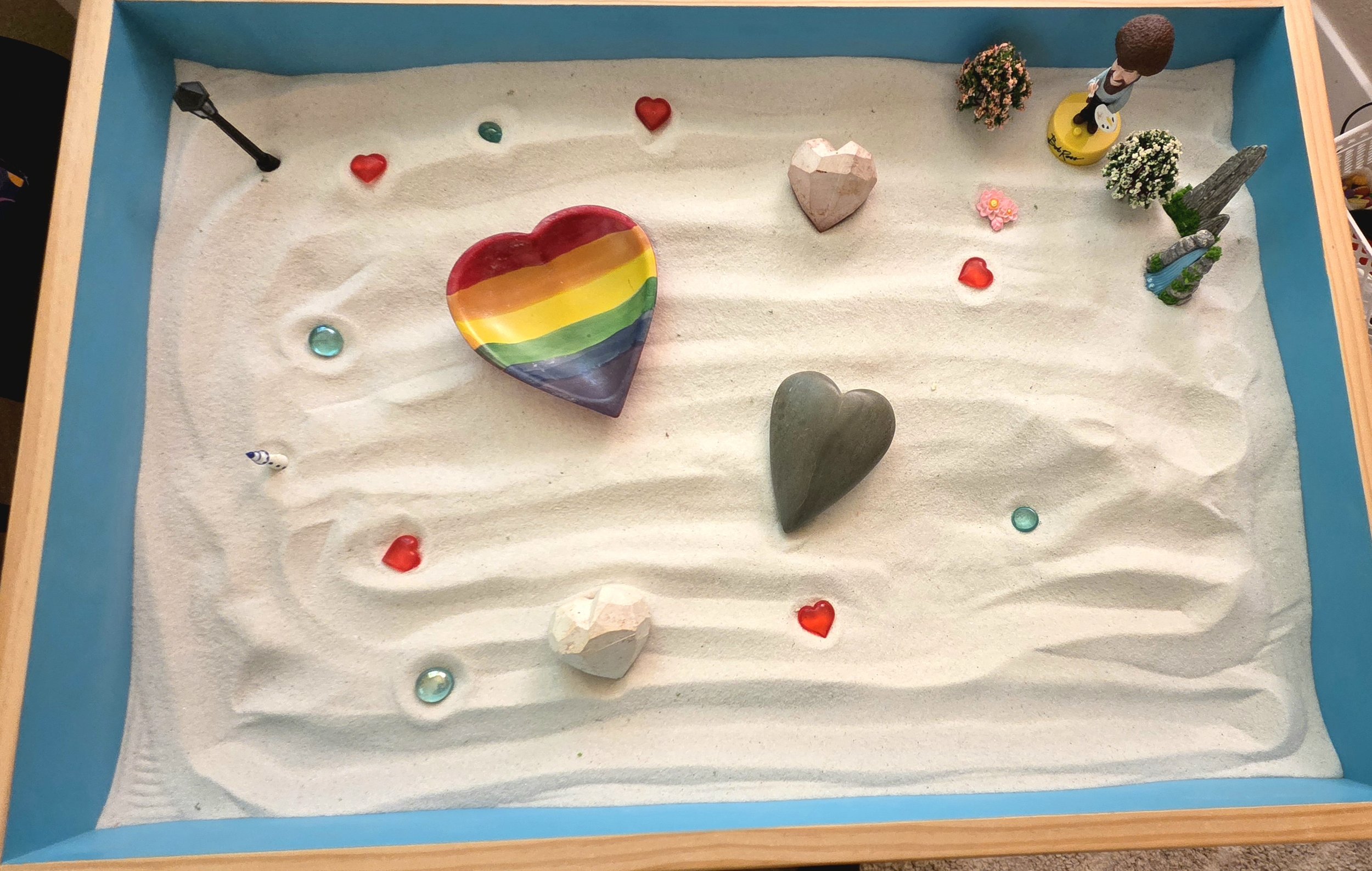
The Personal One
I grew up minimally verbal. I learned to move through the world without words. Rejoining the land of the talking has been its own lifelong process. Sandtray gives me the opportunity to revisit that wordless world, and guide those I work with who find themselves there too.
With sandtray, there’s an inherent permission of non-performance. You don’t have to produce words before you have them.
Sandtray is many things. It’s humble. It’s profound. It’s scary. It’s sneaky. It’s freeing. It bypasses defenses talking rarely can alone. It connects people to emotions and experiences they otherwise wouldn’t have access to through a channel that lives below language.
I have never had two sandtray sessions with clients that were ever alike. So for some, sandtray is grappling with death and confronting the unknown. For others, it provides a safe place to land and begin to reconnect with their felt sense of living.
Adults don’t lose the need for play. They lose the permission and opportunity for it. Esepcially for high-achievers. Play is an essential language and tool for children, and vital to adults’ wellbeing.
Sandtray gives the permission back to adults, invites them to become playful—not childish. There’s no wrong answer. It’s not a test you can pass or fail. There’s no performance.
The Metaprocess
At the end of the session, we return. We consolidate, and make conscious what the hands already knew.
She left carrying something new. Something that will probably unfold in her life in the weeks to come, as it often does with sandtray.
Not everything that shifts in a sandtray session arrives in words. That’s part of its strength, and is often the first real sign something has moved.
