On Shrinking: From a Professional Shrink
I know I’m late to the Shrinking review bandwagon. To be fair, I’m often reluctant to watch therapist-centric shows. I’ve seen too many that are either very boring (because they are too realistic) or too… anxiety-provoking, due to all of the ethics violations.
I went into Shrinking completely blind, expecting the worst. I just knew there were sure to be many cringey ethics violations. And there definitely are. Tons of them.
But I truly didn’t expect to enjoy the show as much as I am. It’s funny, and very much not boring. All three therapist characters are interesting, showing different flavors of therapy and "use of self"—even though it’s often, comedically, way too much use of self.
So, here’s where Shrinking gets the life and profession of a therapist wrong, and the subtle, almost-magic ways it gets it right.
The Ethics Violations (Because we have to)
Can any therapist in good conscience write an article without addressing these? From my perspective, they are vital to talk about. I want any current or potential client to understand what good, ethical therapy looks like, so they can know when to give enthusiastic consent and when they ought to walk away!
The Self-Disclosure Issue: At first, this is particularly glaring with Jimmy’s character. He’s gone through a horrific life event, and it would be unrealistic to expect him to be 100 percent perfect. But as a therapist, he is supposed to responsibly respond to these life events and how they might impair his ability to provide therapy. Realistically, this is a time where a leave of absence would be necessary, followed swiftly by his own therapy and regular consultation.
"So what, Morgan?" If you’ve never been to therapy, you might be wondering, "What’s so wrong about the characters self-disclosing?" Self-disclosure in and of itself is not the issue; I regularly use it in a therapeutic capacity. The problem is the intent. If you ask yourself, “Who is helping whom?” in those interactions, more often than not his clients are providing the therapy to him. When was the last time you paid any provider to do the work for them?
The “Jimmying”: Exposure therapy is a valid, research-supported treatment for many conditions. What sets Jimmy’s version apart is the way it’s applied. In the show, there’s no informed consent—no education around risks, benefits, or limits of confidentiality. Clients are always supposed to be in the driver’s seat. (If you feel like you aren’t, pay attention to that). In this context, "Jimmying" is really just a way to soothe Jimmy’s own feelings.
What the Show Gets Right
Now that I’ve hammered home the violations, let’s pivot to what the show gets right.
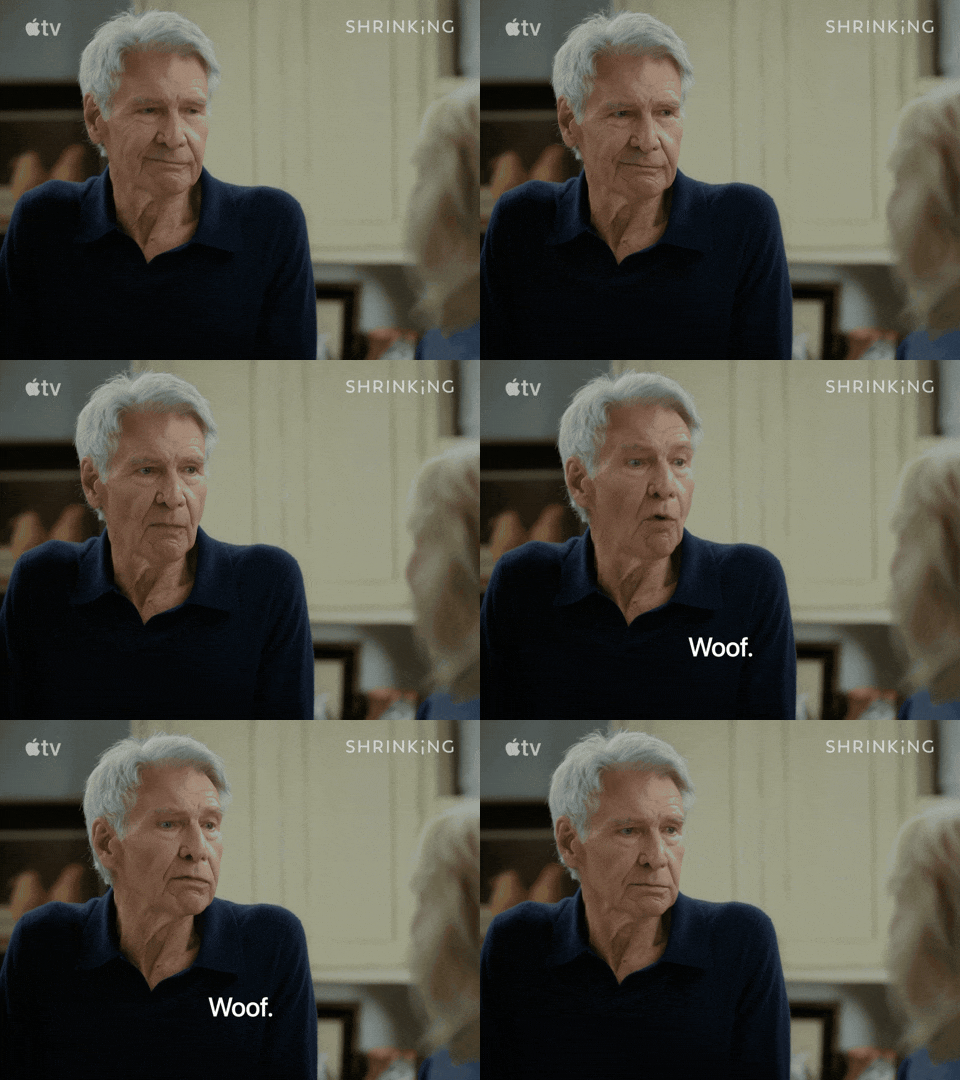
The Acknowledgment of Boundaries: This one gets a half-point. It was refreshing to see a show acknowledge the boundaries being crossed. In real life, what Harrison Ford’s character did—calling out the behavior and saying it’s wrong—is exactly what we are called to do. The other half of the equation would be urging a peer to seek their own therapy and ongoing consultation to manage the countertransference (our own stuff) that gets in the way of the work.
The Influence of the Therapist’s Life: The show effectively conveys that when therapy is done well, it’s because the therapist is making strides to better themselves, too. We are learning from our clients continually. I especially appreciate how the show addresses long-standing patterns as opportunities to finally do something different.
The Bottom Line
Shrinking is ridiculous, but it captures the heart of the matter: we are all humans trying to figure it out. Therapy is a special, sacred space meant for your growth—not your therapist's.
Just... maybe don't move into your therapist's house. That is definitely not a valid clinical approach.
